Canary Island Bellflower (Canarina canariensis, also known as Canarina campanula)
An endemic climbing plant with large, red flowers
Characteristics
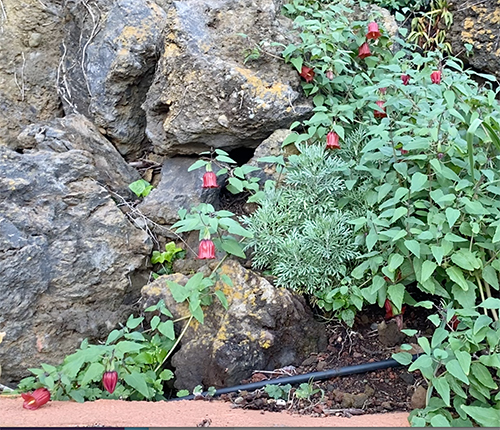
The Canary Island bellflower (also known locally as Bicácaro) is a climbing plant in the bellflower family (Campanulaceae). During the hot, dry Canary Islands summer, it retreats completely into its thickened, fleshy tuberous root and sprouts anew at the start of the wetter months. Its herbaceous shoots grow several meters long and readily climb slopes and walls.
Location
It prefers partially shaded to shaded locations with well-drained, slightly moist soil and elevations between 300 and 1,000 meters above sea level.
Uses
After flowering, it produces a large, fleshy, orange-yellow berry that is edible and has a sweet taste. Based on our own experience, we recommend a little caution when tasting it—Matthias had the first allergic shock of his life. But these are individual experiences, and any unknown fruit should be tested in small amounts first anyway.
Observations
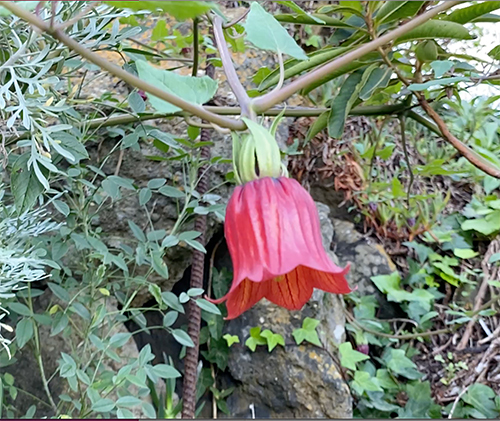
We planted the Campanula here about three years ago. It was small and unassuming at first, but then it grew quite a bit. Not only have the long, thin shoots spread, but the super-pretty flowers—which look like chalices from a fairy tale—have also become much larger. In the summer, when it gets dry and hot, the plant goes completely dormant. The above-ground shoots wither, and it survives the hot season as a fleshy tuber/storage root underground. Apparently, small birds and geckos love its nectar and thus take care of pollination.